
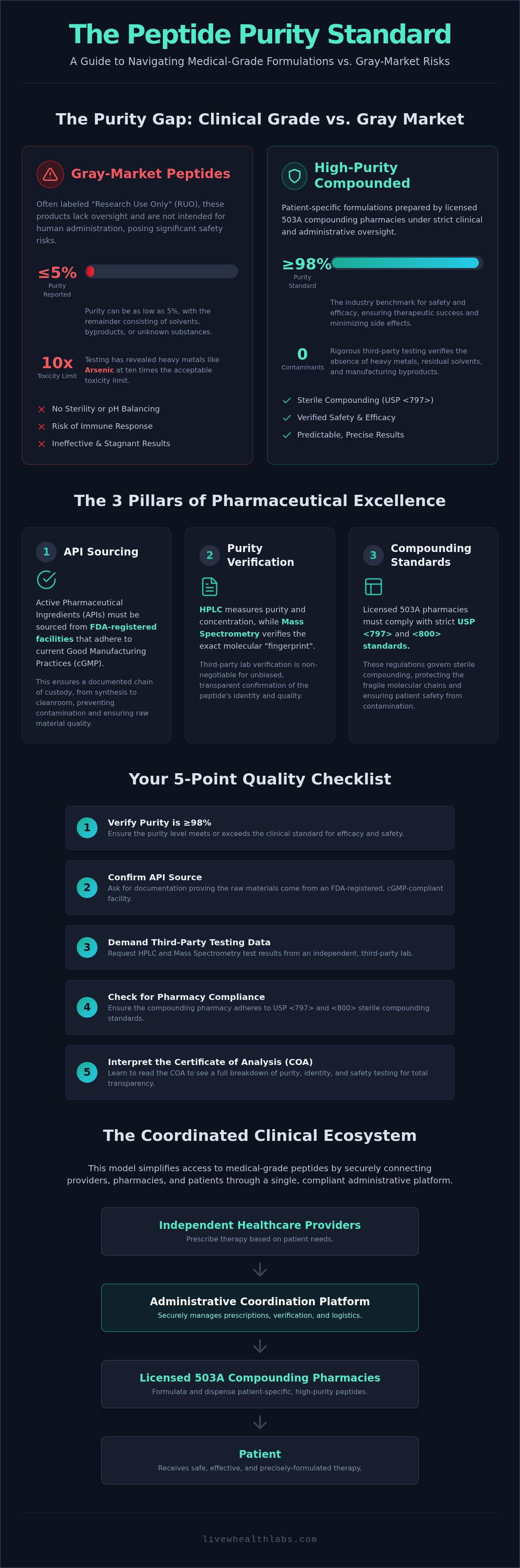
A 2026 joint white paper revealed a sobering reality for the wellness industry: many gray-market peptides contain as little as 5% purity, with some testing positive for heavy metals like arsenic at ten times the toxicity limit. For those seeking precision results, the distinction between a research chemical and high purity compounded peptides isn't just a matter of semantics; it's a fundamental requirement for safety and efficacy. You've likely felt the frustration of navigating a landscape filled with under-dosed products and unregulated sources that offer little more than digital promises.
We understand that the path to optimized health should be defined by transparency and clinical rigor, not administrative confusion. This article serves as your definitive guide to the 2026 standards for precision formulations. You'll discover the specific sourcing requirements that define pharmaceutical excellence and the administrative oversight needed to access them securely. We will examine the verification processes used by licensed 503A pharmacies and the coordinated clinical ecosystem that ensures your therapy meets the highest benchmarks of modern science. By the end of this exploration, you'll have the clarity required to move from generic wellness to a sophisticated, medical-grade protocol.
Key Takeaways
- Learn why verifying API sourcing from FDA-registered facilities and HPLC testing are non-negotiable for ensuring you receive high purity compounded peptides.
- Understand the impact of USP <797> and <800> standards on sterile compounding to protect the fragile molecular chains of your precision formulations.
- Master a 5-point checklist for evaluating peptide quality, including how to interpret a Certificate of Analysis (COA) for total transparency.
- Recognize the critical safety risks associated with unregulated gray-market alternatives compared to coordinated clinical-grade sourcing.
- Discover how an administrative coordination model simplifies the path between independent providers and licensed 503A compounding pharmacies.
The Evolution of Peptide Therapy and the Purity Challenge
Peptides are the primary biological messengers of the human body. These short chains of amino acids function by binding to specific cell surface receptors, effectively unlocking metabolic and regenerative processes. In 2026, the demand for these signaling molecules has reached an all-time high, driven by a global shift toward metabolic health and cellular longevity. However, this rapid expansion has exposed a dangerous Purity Gap. While the market is flooded with accessible options, the difference between a raw chemical and high purity compounded peptides is the difference between systemic risk and therapeutic success. Accessing these formulations requires more than a simple transaction; it demands a system of precision coordination that prioritizes patient safety through every stage of the supply chain.
Why High Purity is Non-Negotiable in 2026
Biological precision is the foundation of modern wellness. When a peptide sequence is compromised by residual solvents or manufacturing byproducts, the results are rarely neutral. These impurities can trigger adverse immune responses or chronic systemic inflammation, turning a potential therapy into a biological burden. Beyond safety, purity directly dictates efficacy. Under-dosed or degraded peptides fail to reach the necessary threshold for receptor activation, leaving patients with stagnant results. Clinical excellence is the baseline where every molecule is accounted for and every sequence is verified. Without this rigor, the promise of precision wellness remains unfulfilled.
The Problem with Research-Grade Labels
The surge in peptide interest has led many to the Research Use Only (RUO) market. It's vital to understand that RUO peptides are produced as laboratory reagents, not as human-grade medications. These products lack the essential sterility, pH balancing, and buffer stability required for safe administration. They are often manufactured in facilities that don't adhere to the strict compounding pharmacy standards required for patient safety. Research chemicals are strictly laboratory tools intended for animal or in vitro study, while compounded medications are sophisticated, patient-specific formulations prepared under the highest levels of pharmaceutical oversight.
Defining High Purity: Beyond the Label
Purity is not a static attribute. It is a dynamic benchmark achieved through rigorous analytical chemistry and verified by independent laboratory standards. In the clinical world of 2026, the industry standard for high purity compounded peptides is a threshold of 98% or higher. Anything below this level introduces an unacceptable margin for error, as the remaining percentage often consists of residual solvents, truncated peptide sequences, or manufacturing byproducts. Achieving this level of excellence requires a sophisticated two-step verification process that moves beyond the manufacturer’s self-reported data.
The Role of HPLC and Mass Spectrometry
The technical distinction of high purity compounded peptides relies on two specific analytical pillars. First, High-Performance Liquid Chromatography (HPLC) is used to separate the components of a sample. This process measures the exact concentration and purity of the peptide chain, ensuring no degradation has occurred. Second, Mass Spectrometry acts as the molecular fingerprint. It verifies that the molecular weight of the substance matches the intended formula exactly. While HPLC tells us how much of the substance is pure, Mass Spectrometry tells us exactly what that substance is. Relying on third-party laboratory verification for these tests is the only way to ensure total transparency. It removes the conflict of interest inherent in internal testing and provides a verifiable trust signal for both providers and patients.
Active Pharmaceutical Ingredient (API) Sourcing
The quality of any therapeutic begins with its raw materials. High-grade API sourcing involves obtaining substances from FDA-registered facilities that adhere to current Good Manufacturing Practices (cGMP). This contrasts sharply with the "gray market" of bulk powder imports, which often carry significant safety risks due to unknown origins and lack of oversight. A documented chain of custody is essential for pharmaceutical-grade materials. It ensures that every gram of powder is tracked from the point of synthesis to the moment it enters the cleanroom. This foundation of quality is what allows for the creation of customized wellness formulations that deliver predictable, safe, and effective results. When the raw materials are unverified, the entire therapeutic protocol is compromised. If you're ready to prioritize clinical-grade sourcing, you can explore our coordination services to connect with verified partners.
The Compounding Process: Why Pharmacy Standards Matter
Precision is not merely a lab result; it's a physical environment. For high purity compounded peptides, the preparation phase is where molecular integrity is either preserved or lost. Peptides are notoriously fragile signaling molecules. Their delicate amino acid chains can denature or degrade if exposed to improper temperatures, light, or fluctuating pH levels. This vulnerability makes strict adherence to FDA compounding standards, specifically USP <797> for sterile preparations and USP <800> for hazardous drug handling, a non-negotiable requirement for clinical excellence. These protocols ensure that the transition from raw API to a finished therapeutic is managed with absolute administrative and pharmaceutical rigor.
Sterile Cleanroom Environments
Maintaining the stability of a peptide requires an environment that eliminates external variables. Licensed 503A compounding pharmacies operate within ISO-certified cleanrooms, where air filtration and pressure gradients prevent the introduction of microbial contaminants. The gowning protocols are exhaustive. Pharmacists use specialized equipment to ensure that every vial remains sterile throughout the formulation process. Sterility testing is the final gatekeeper; it's a mandatory step that verifies the absence of pathogens before any medication is cleared for patient use. This level of environmental control is what separates a professional formulation from the high-risk alternatives found in unregulated markets.
Customization vs. Generic Retail
The transition toward precision wellness has highlighted the limitations of mass-produced medications. Standard retail options often force a one-size-fits-all approach that ignores individual biological variability. Through professional compounded medication fulfillment services, independent providers can request specific concentrations that align with a patient's unique metabolic profile. This coordination allows for the creation of synergistic formulations. By combining multiple peptides into a single, stabilized solution, the protocol becomes more efficient while enhancing therapeutic outcomes. Proper pH balancing is equally critical; it ensures that injectable or topical peptides are optimized for absorption and tissue compatibility. This level of customization requires a sophisticated administrative bridge to match complex formulas with specific patient needs, ensuring that high purity compounded peptides deliver the exact results they were designed to achieve.
Verifying Quality: A Patient’s Checklist
The burden of verification shouldn't rest solely on the patient, yet understanding the hallmarks of quality is essential in a market prone to misinformation. Ensuring you receive high purity compounded peptides requires a structured approach to evaluation. It moves beyond taking a vendor's word and into objective, verifiable data. This transparency is what defines a professional coordination service, separating it from the high-risk alternatives found in unregulated online shops.
Use this 5-point framework to evaluate any coordination platform or sourcing partner:
- Pharmacy Licensure: Confirm the facility is a licensed 503A compounding pharmacy.
- Analytical Transparency: Request access to third-party batch testing results.
- Clinical Oversight: Ensure a licensed provider reviews your health history before any formulation is authorized.
- Data Security: Verify that all communication and health records are managed within a HIPAA-compliant infrastructure.
- Administrative Integrity: Look for clear documentation regarding the chain of custody for all raw materials used in the formulation.
Reading a Certificate of Analysis (COA)
A Certificate of Analysis is the most critical document in your verification toolkit. It provides a granular look at the specific batch being dispensed. When reviewing a COA, prioritize three key fields: the purity percentage, the batch number, and the date of testing. For clinical-grade results, the purity should meet or exceed the 98% threshold. It's imperative that the COA comes from an independent, third-party laboratory rather than the manufacturer's internal department. This separation ensures the data is unbiased. A high-purity result is only valid if the batch number on the report matches the batch number printed on your patient vial.
The Clinical Necessity of Oversight
Self-prescribing peptides is a significant risk that bypasses critical safety screenings. Independent licensed providers play a vital role in determining the appropriate dosage and duration based on your unique metabolic markers. They monitor for contraindications. This professional guidance is a core component of precision peptide therapy online, where clinical rigor meets administrative convenience. By prioritizing medical oversight, you protect your biological health while maximizing the efficacy of high purity compounded peptides. Protecting your sensitive health data is equally important. A professional coordination platform ensures your information remains secure through every step of the process. If you're ready to secure a medically-supervised protocol, you can begin your coordination process here.
The Whealth Labs Model: Coordinating Clinical Excellence
Accessing high purity compounded peptides shouldn't be a fragmented search through unverified vendors. It requires a sophisticated, professional bridge between the clinical world and the individual. Whealth Labs operates as this essential administrative coordinator. We don't practice medicine or offer retail products; instead, we manage the intricate logistics that define modern precision therapy. By facilitating a seamless link between patients, independent licensed providers, and accredited 503A compounding pharmacies, we ensure that every stage of the journey is governed by transparency and clinical rigor.
Administrative Precision and Compliance
The transition from a wellness concept to actual therapeutic fulfillment is often hindered by administrative friction. Our model is designed to eliminate these obstacles by organizing consultations and data flow within a single, secure infrastructure. We prioritize HIPAA-compliant data management, ensuring that your sensitive health information remains protected at every touchpoint. This commitment to security is matched by our focus on regulatory compliance. We coordinate the necessary medical consent protocols and verify that all sourcing meets 2026 pharmaceutical standards. This isn't a simple retail experience; it's a carefully supervised sequence of professional interactions designed to provide high purity compounded peptides with absolute administrative precision. The result is a process that feels effortless for the patient while remaining uncompromising in its adherence to safety.
Your Path to High-Purity Wellness
Professional coordination represents the "quiet luxury" of the wellness industry. It's a service defined by its minimalist, highly organized, and secure approach to health optimization. The long-term value of this infrastructure lies in the predictability it offers. You don't have to wonder about the origin of your formulations or the legitimacy of the cleanrooms where they're prepared. Through the Whealth Labs platform, you can verify your eligibility for precision protocols and connect with independent providers who understand the nuances of peptide therapy. This coordinated system ensures that your energy is spent on your health goals rather than the complexities of the medical supply chain. If you're ready to move beyond generic solutions and embrace a system built on pharmaceutical excellence, you can explore precision peptide coordination with Whealth Labs today.
Securing Your Standard for Precision Health
The landscape of metabolic health is shifting toward a model where clinical rigor is the only acceptable baseline. Accessing high purity compounded peptides requires more than just curiosity; it demands a commitment to verified sourcing and professional oversight. You've seen how the 98% purity threshold and independent laboratory verification serve as the final gatekeepers against the risks of unregulated alternatives. True precision wellness isn't found in a simple transaction, but in a coordinated ecosystem that respects both biological complexity and administrative security.
Whealth Labs provides the infrastructure needed to navigate this environment with confidence. Our HIPAA-compliant platform facilitates the critical link between your health goals, an independent provider network, and licensed 503A pharmacies. We manage the administrative friction so you can focus on your results. If you're ready to transition into a medically-coordinated protocol defined by pharmaceutical excellence, you can Explore Precision Peptide Coordination with Whealth Labs. Your path to optimized health deserves the highest standard of care.
Frequently Asked Questions
What is the difference between research-grade and compounded peptides?
Research-grade peptides are chemical reagents intended for laboratory study, not for human administration. They aren't tested for sterility or pH balance. In contrast, high purity compounded peptides are patient-specific medications prepared in licensed 503A pharmacies. These formulations undergo rigorous testing and are dispensed only through a valid prescription. This ensures they meet the clinical standards necessary for human safety and therapeutic efficacy.
How can I verify the purity of my compounded peptides?
Verification requires reviewing a batch-specific Certificate of Analysis from an independent laboratory. You should look for a purity threshold of 98% or higher and confirm the batch number on the report matches your vial. This documentation proves the substance has undergone High-Performance Liquid Chromatography (HPLC) and Mass Spectrometry. These tests identify the exact molecular sequence and ensure the absence of heavy metals or residual solvents.
Are high-purity compounded peptides FDA-approved?
Compounded medications don't receive individual FDA approval like mass-marketed drugs because they are tailored to individual patient needs. However, 503A compounding pharmacies must use bulk drug substances from FDA-registered facilities. The pharmacies themselves are regulated by state boards of pharmacy and must adhere to federal standards for quality and safety. This regulatory framework ensures that the ingredients used in your precision protocol meet pharmaceutical-grade requirements.
Why do I need a medical consultation for peptide therapy?
A consultation is a clinical requirement for any peptide protocol to ensure safety and metabolic compatibility. Licensed providers evaluate your health history to determine the correct sequence, dosage, and duration for your specific needs. They also screen for potential contraindications that could lead to adverse effects. Peptides are signaling molecules that interact with complex biological systems; they aren't over-the-counter products and require professional oversight for effective use.
What is a Certificate of Analysis (COA) and why does it matter?
A Certificate of Analysis is a formal document that summarizes the laboratory results for a specific batch of medication. It matters because it provides objective proof that the product contains the intended peptide sequence at the stated concentration. The COA lists the purity percentage and confirms the absence of microbial contaminants. Without this document, there's no way to verify that a formulation is truly clinical-grade or safe for administration.
How does Whealth Labs ensure the quality of the pharmacies they coordinate with?
Whealth Labs maintains quality by coordinating exclusively with licensed 503A compounding pharmacies that follow strict USP <797> and <800> standards. Our administrative process ensures these facilities maintain ISO-certified cleanrooms and perform regular sterility testing. We act as a bridge, verifying that every partner pharmacy adheres to the highest levels of pharmaceutical rigor. This coordination provides patients with a secure, transparent path to accessing precision-grade wellness formulations.
Can multiple peptides be combined into one high-purity formulation?
Compounding pharmacies can create customized formulations that combine synergistic peptides into a single vial. This precision approach allows for a more streamlined protocol while potentially enhancing therapeutic outcomes through molecular synergy. Each combined formulation is prepared according to a provider's specific prescription, ensuring the concentrations are balanced for stability and effectiveness. It's a sophisticated alternative to the one-size-fits-all approach found in generic retail medications.
How should compounded peptides be stored to maintain their purity?
Proper storage is essential to prevent the denaturation of fragile peptide chains. Most high purity compounded peptides require a temperature-controlled environment, typically refrigeration between 36°F and 46°F. You should also protect the vials from direct light and avoid excessive agitation. These molecules are sensitive to environmental fluctuations; improper storage can lead to degradation, reducing the efficacy of the therapy and potentially compromising the safety of the formulation.