
The safest first biohack may be the least dramatic: making one everyday habit more consistent. If conflicting advice and high-tech trends have left you unsure how to get started with biohacking, begin with what you can observe and sustain, not an intervention that promises a shortcut.
It’s reasonable to want a clear plan when wearables, supplements, and experimental approaches compete for attention. But more data or a more advanced tool doesn’t automatically lead to a better decision. Start with a few realistic habits, track only signals that help you understand your routine, and change one thing at a time.
This guide will help you build that foundation in 2026: choose practical habits, assess evidence before adopting new interventions, and use tracking without letting numbers take over. You’ll also learn when self-directed experimentation should give way to clinical guidance. If your goals call for individualized medical assessment, Whealth Labs coordinates access to independent licensed clinicians. The aim is not to optimize everything at once, but to make thoughtful progress with appropriate support.
Key Takeaways
- Start with foundational habits such as sleep regularity, physical activity, balanced nutrition, and stress practices before pursuing more complex interventions.
- Learn how to get started with biohacking by choosing one goal, recording a baseline, changing one habit, and reviewing your experience consistently.
- Separate established habits from uncertain claims, and treat more data or more interventions as choices to assess, not automatic upgrades.
- Recognize when a question needs individualized medical assessment from a licensed clinician rather than online self-experimentation.
- Understand how responsible clinical coordination can support next steps when your goals call for professional guidance.
What Does Biohacking Mean, and What Is a Sensible Place to Start?
Biohacking is the deliberate adjustment of habits or surroundings in an effort to influence health or performance. The term can describe straightforward choices, such as keeping a regular bedtime, as well as more technical or experimental practices. It isn’t a regulated medical discipline, and using the label doesn’t establish that a method is safe or effective. The broad range of meanings is reflected in the overview of Body hacking, which includes both everyday approaches to managing biology and more extreme practices.
Curiosity is a reasonable starting point, but you don’t need expensive equipment or an intensive protocol to explore it. Noting your sleep schedule or how often you take a walk is ordinary self-tracking. It can help you notice patterns, but it doesn’t diagnose a condition, replace medical treatment, or guarantee a health outcome. A health concern that needs assessment is a matter for a licensed clinician.
Is biohacking just another word for wellness?
What should beginners prioritize first?
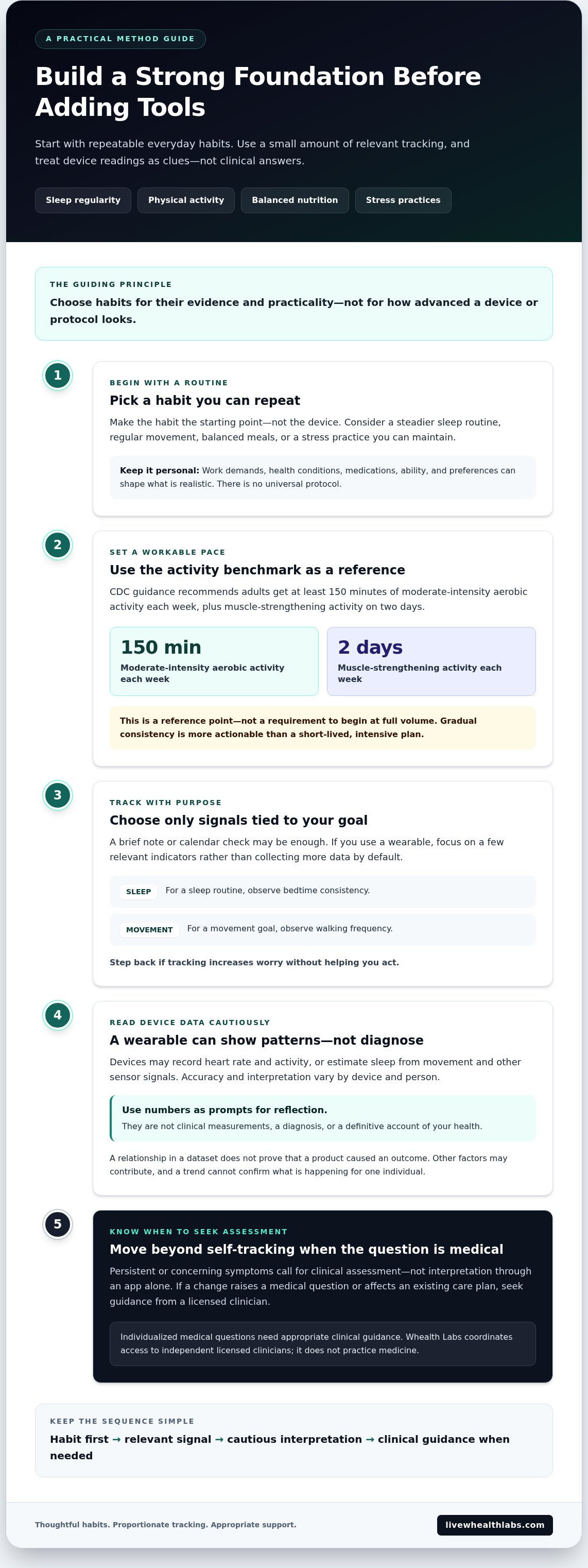
Start with consistent routines before adding supplements, devices, or intensive interventions. Choose a goal that matters in everyday life, such as a steadier sleep schedule or making movement a regular part of your week. There’s no universal protocol: work demands, existing health conditions, medications, and personal preferences can all shape what’s realistic. Learning how to get started with biohacking isn’t about copying someone else’s routine. It’s about making one considered change you can observe and sustain.
- Choose one focus: Pick a practical habit rather than trying to overhaul several areas at once.
- Keep the method simple: A brief note or calendar check may be enough to track consistency.
- Stay attentive to context: If a change raises a medical question or affects an existing care plan, seek guidance from a licensed clinician.
Small, measured adjustments offer a sensible foundation. Consider more sophisticated tools or individualized interventions only when a clear goal and appropriate guidance justify them.
Which Biohacking Methods Have the Strongest Foundation?
Judge a method by the quality of its evidence and how practical it is to sustain, not by how advanced its device looks. Regular sleep, physical activity, balanced nutrition, and stress-management practices are sensible foundations because they fit into daily life and support general health without requiring a specialized protocol. Stony Brook Medicine’s guide to Separating Fact from Hype offers a useful distinction between established lifestyle habits and claims that need more evidence. No habit guarantees a particular result, and individual needs vary.
Why are sleep, movement, and nutrition common starting points?
These habits are repeatable, adjustable, and easier to evaluate than a stack of new interventions. Aim for a sleep routine that works with your circumstances, regular movement suited to your ability, balanced meals, and stress practices you can maintain. For a general benchmark, CDC guidance recommends adults get at least 150 minutes of moderate-intensity aerobic activity each week and do muscle-strengthening activity on two days. That’s a reference point, not a requirement to begin at full volume. Gradual consistency is more actionable than a short-lived, intensive plan.
What can wearables and self-tracking actually tell you?
Wearables can help you observe selected patterns, but their estimates are not clinical measurements. A device may record heart rate and activity, then estimate sleep from movement or other sensor signals. Accuracy and interpretation vary by device and person. Use only a few indicators tied to your goal, such as bedtime consistency for a sleep routine or walking frequency for a movement goal. Treat the numbers as prompts for reflection, not a diagnosis or a definitive account of your health.
An association is not proof of treatment effect: if a dataset links longer device-estimated sleep with better mood, that relationship alone doesn’t establish that extending sleep through a particular product caused the mood difference. Other factors may contribute, and an observed trend cannot confirm what is happening for one individual. Persistent or concerning symptoms call for clinical assessment, not interpretation through an app alone.
- Start with the habit: Choose a routine before buying a device to measure it.
- Keep tracking proportionate: Review a small number of relevant trends, and step back if the data increases worry without helping you act.
If your questions shift from everyday habits to individualized medical care, Whealth Labs’ clinical coordination connects you with independent licensed clinicians. Whealth Labs coordinates access; it doesn’t practice medicine.
Biohacking Claims vs. Reality: How to Avoid Costly or Risky Shortcuts
More data, supplements, or interventions don’t automatically produce better results. Assess each biohacking idea in context: established habits such as regular movement have a different evidence and risk profile from emerging methods with limited human research, while interventions that affect medical care require clinical oversight. Novelty, complexity, and persuasive marketing aren’t evidence of benefit.
- Established habits: Practical routines supported by broad health guidance, though individual outcomes still vary.
- Promising but uncertain approaches: Methods that may have early research, but need stronger or more relevant evidence before their benefits can be assumed.
- Medical interventions: Treatments or substances that may affect health or interact with care, and should be considered with a licensed clinician.
Look beyond a headline or a single study. Consider whether the research involved people, measured an outcome that matters to you, and clearly described its limitations. A small or short study may raise a question without settling it. Also check who funded the research and whether the source is selling the intervention. Potential conflicts don’t automatically invalidate findings, but they make independent confirmation especially valuable.
How can you tell a credible biohacking claim from hype?
Give more weight to human evidence, relevant outcomes, transparent methods, and findings that have been reproduced than to dramatic anecdotes or a plausible-sounding mechanism. A biological explanation may suggest how something could work, but it doesn’t establish that it improves health in practice. Testimonials and mechanistic explanations alone do not establish effectiveness. Guaranteed outcomes, dramatic timelines, and one-size-fits-all promises deserve particular caution. Verify specific intervention claims against current, authoritative sources.
When should biohacking involve a licensed clinician?
A measured approach is still progress. To decide how to get started with biohacking, favour changes you can explain, evaluate, and sustain. Pause before taking on a claim that depends on certainty the evidence doesn’t provide.
How to Get Started With Biohacking: A Practical First-Month Plan
A useful first month is a structured opportunity to observe and adjust, not a deadline for achieving a promised result. The aim is to test one manageable change while keeping the process flexible. A notebook, calendar, or device you already own is enough; new equipment isn’t required.
How do you choose one useful biohacking goal?
Turn a broad aim such as “feel better” into an observable routine that fits your schedule and health context. For example, you might focus on keeping a more consistent bedtime or making room for regular walks. Avoid introducing several new habits, supplements, and devices at once. Changing one element at a time makes it easier to understand what you can sustain.
How should you track progress without overreacting to data?
Before changing the routine, note what currently happens. Then review patterns over time rather than treating each day’s fluctuation as a verdict. A short weekly reflection can capture whether you followed the habit, how you felt, and what made it easier or harder. Use the notes to guide a practical decision, not to chase perfect numbers.
Use this four-step sequence as a framework, adapting it to your circumstances:
- Choose a goal: Name one specific routine you want to explore.
- Record a baseline: Briefly note your current pattern using a journal or existing device.
- Change one habit: Make a realistic adjustment without layering on other experiments.
- Review consistently: Look at adherence, wellbeing, and barriers, then decide whether to continue, adapt, or stop.
Keep the review open-ended. If a routine doesn’t fit, adjust it rather than forcing an arbitrary target. If concerning symptoms arise, pause the experiment and seek clinical advice. Don’t change prescribed treatment or try medically active interventions on your own. For more context on individualized oversight, read our guide to biohacking with medical oversight.
This measured process offers a practical answer to how to get started with biohacking: make a clear choice, observe thoughtfully, and let evidence and personal context shape what comes next. If your goals raise individualized medical questions, explore clinical care coordination through Whealth Labs, which facilitates access to independent licensed clinicians.
When Biohacking Becomes Personalized Care: Choosing Responsible Next Steps
Simple habit-building can often begin with observation and practical adjustments. The boundary changes when a question involves persistent symptoms, a diagnosis, prescribed treatment, or a therapy intended to affect a medical condition. Those decisions need individualized clinical assessment, not an online self-experiment. That doesn’t mean every biohacking goal calls for tests, medication, or a prescription. Many people can focus on general wellness habits without entering a clinical care pathway.
What changes when a wellness question needs medical assessment?
An independent licensed provider can consider your health history, symptoms, medications, and goals when assessing whether an intervention may be appropriate. This context matters because an approach that seems reasonable in general may carry different considerations for someone with a particular condition or treatment plan. For individuals seeking comprehensive, root-cause guidance alongside lifestyle changes, holistic primary care practices such as westridgeholistic.com offer a supportive clinical perspective. Discuss potential changes with a clinician before stopping or adjusting prescribed care, or beginning a medically active intervention.
How does Whealth Labs fit into a clinically coordinated process?
Whealth Labs is an administrative and educational coordination platform, not a medical practice. It facilitates coordination among the user, an independent licensed provider, and a compounding pharmacy when applicable. The provider is responsible for clinical assessment and care decisions; the platform supports access, consent, and administrative workflows. Any therapy is considered through that provider relationship, not as a self-directed shortcut.
For readers whose questions specifically concern peptide-based care, precision peptide therapy online is an optional topic to explore further. It isn’t a required first step in learning how to get started with biohacking, and reading about a therapy doesn’t establish that it’s appropriate for you. Personalized treatment decisions belong with a licensed clinician.
A responsible next step may simply be to keep building sustainable routines. If you have a question that calls for individualized medical assessment, explore Whealth Labs’ care coordination to learn how administrative support connects users with independent licensed providers. Clinical judgment remains with the provider.
Make Your Next Step Measured and Personal
Biohacking doesn’t need to begin with a device or a complex intervention. A sensible approach is to choose one realistic habit, track a few relevant signals, and assess claims with care. That gives you a practical way to learn how to get started with biohacking while keeping expectations grounded and avoiding unnecessary experimentation.
If your questions involve symptoms, prescribed treatment, or an individualized therapy, bring them to a licensed clinician. Whealth Labs supports administrative coordination with independent licensed providers, including HIPAA-compliant information handling and facilitated access to individually prescribed wellness therapies when appropriate. Clinical decisions remain with the provider, and not every wellness goal requires medical treatment.
If coordinated support feels relevant to your next step, explore a more coordinated approach to personalized wellness. You can begin with simple habits, stay curious, and build on what you learn at a pace that suits you.
Frequently Asked Questions
What is the easiest way to start biohacking?
A practical way to learn how to get started with biohacking is to choose one repeatable habit, such as keeping a consistent bedtime or planning regular movement. Briefly record your current routine before making a change, then review how it feels over time. You don’t need a wearable or supplement. If you have symptoms or a medical condition, discuss potential changes with a licensed clinician.
Is biohacking safe for beginners?
Some gradual lifestyle changes may be low risk for many people, but safety depends on individual circumstances. A simple habit journal is different from an extreme diet, supplement, or medically active intervention, which may carry risks or interact with treatment. Don’t change prescribed care on your own. If you have a health condition, take medication, or experience symptoms, discuss an appropriate approach with a licensed clinician.
Can you biohack without buying devices or supplements?
Yes, you can begin with habits and observations rather than purchases. For example, you could note your usual bedtime, plan regular activity, or keep a brief journal about a routine you want to change. Devices can provide estimates, but they’re optional and don’t replace clinical assessment. Be cautious about buying products based on claims of guaranteed or rapid results, and choose a habit you can track consistently.
How long does it take to see results from biohacking?
There’s no universal timeline for results from biohacking. What you notice depends on the habit, the outcome you’re observing, and your individual circumstances. Look for patterns over time rather than treating one unusually good or difficult day as proof that a change worked or failed. Set a realistic point to review your routine, and seek clinical guidance if your goal involves symptoms or a medical condition.
Do you need blood tests to start biohacking?
No, blood tests aren’t necessarily needed to begin. You can start by clarifying a goal and observing everyday routines without ordering tests. Whether testing is appropriate depends on the clinical question, your health history, and a licensed clinician’s judgment. Don’t use an isolated lab result to diagnose yourself or guide treatment. Test results need to be interpreted in the context of your overall health.
Should beginners use peptides for biohacking?
No, peptides aren’t a required starting point, and prescription therapies shouldn’t be treated as casual wellness experiments. A licensed provider must assess whether a specific therapy is appropriate for your circumstances. Don’t self-prescribe or use research chemicals. Beginners can focus on practical habits first; if you’re considering a medically supervised therapy, discuss it with a licensed clinician rather than relying on online instructions.
Are wearables accurate enough to guide biohacking?
Wearables can help you observe trends, but their accuracy varies by device and measure. Activity counts and estimated sleep, for example, aren’t diagnostic results, and a score shouldn’t be treated as a medical conclusion. Track only a few measures relevant to your goal, and consider how you feel alongside the data. If a concern persists, discuss it with a licensed clinician instead of relying on an app alone.