The traditional approach to hair restoration often forces an unnecessary compromise between visible efficacy and physiological safety. You might feel trapped between the slow, underwhelming results of over the counter topicals and the potential for systemic side effects from generic pharmaceutical interventions. It's a common frustration to see thinning persist despite following standard protocols. You deserve a solution that reflects the current state of precision medicine. Integrating peptide therapy for hair loss into a professional regimen offers a sophisticated way to stimulate growth without the compromises of the past.
This 2026 guide provides the technical clarity needed to choose the right medically coordinated protocols. You'll discover how to distinguish between volatile research chemicals and verified formulations that utilize GHK-Cu and pharmaceutical grade compounds. We'll outline a rhythmic strategy to stabilize hair fall and stimulate density through professional clinical coordination. By the end of this article, you'll understand how to implement a streamlined, medically overseen treatment plan that prioritizes your aesthetic goals and your long term health. We'll move beyond the confusion of generic retail options toward a system designed for your specific biological needs.
Key Takeaways
- Understand how signaling molecules like GHK-Cu promote angiogenesis to actively increase follicle size and extend the anagen growth phase.
- Discover why peptide therapy for hair loss is most effective when integrated into a dual-action protocol that blocks hormonal damage while triggering cellular repair.
- Evaluate the distinct clinical advantages of topical formulations for localized scalp health compared to oral protocols for systemic DHT inhibition.
- Identify the essential safety standards for 2026, focusing on the necessity of CoA verification and pharmaceutical-grade compounding to ensure formula purity.
- Learn the streamlined process for accessing medically coordinated therapies through secure telehealth consultations and professional administrative management.
The Science of Peptide Therapy for Hair Loss
Peptides represent a fundamental shift from passive maintenance to active cellular signaling. Unlike traditional pharmaceuticals that simply inhibit hormones, peptide therapy for hair loss utilizes short chains of amino acids to instruct the body to repair damaged tissue. These molecules act as biological messengers. They bind to specific cell receptors to trigger protein synthesis and vascular expansion. While generic drugs often focus on blocking DHT, regenerative peptides prioritize the health of the follicular environment. This distinction is critical for those seeking to move beyond mere stabilization.
Specific compounds like BPC-157 play a supportive role by modulating the inflammatory response of the scalp. Chronic micro-inflammation is a silent driver of thinning. By resolving this irritation, BPC-157 creates a stable foundation for new growth. It bridges the gap between clinical healing and aesthetic density. This approach treats the scalp as a living ecosystem rather than a surface to be medicated.
How GHK-Cu Reverses Follicular Atrophy
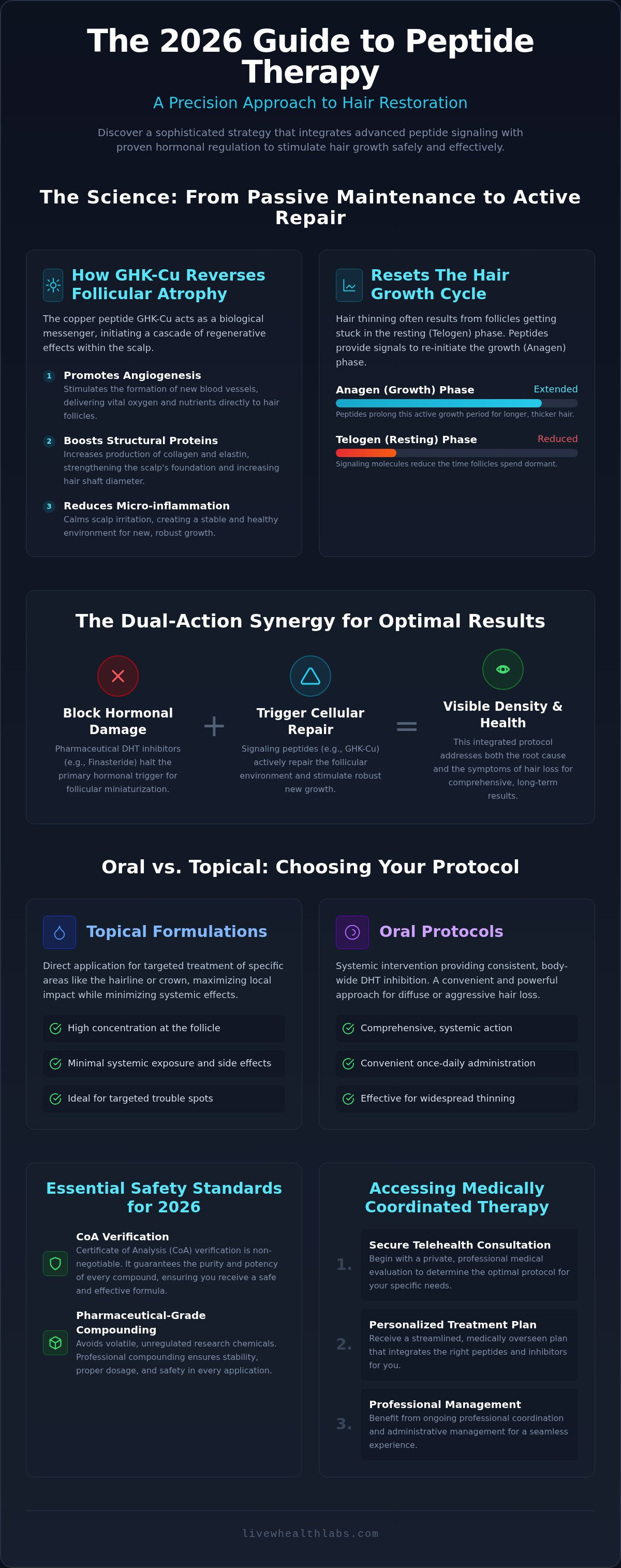
The most established compound in this category is Copper peptide GHK-Cu. It's known for its ability to promote angiogenesis, which is the formation of new blood vessels. This process ensures that follicles receive the oxygen and nutrients required for robust growth. GHK-Cu also stimulates the production of collagen and elastin within the scalp's extracellular matrix. This structural support increases the actual diameter of the hair shaft. It transforms brittle, miniaturized hairs into thicker, more resilient strands. Professional coordination ensures these peptides meet pharmaceutical standards, avoiding the impurities often found on unregulated research sites.
The Role of Signaling Peptides in the Hair Growth Cycle
Hair growth follows a rhythmic cycle of three distinct phases: Anagen (growth), Catagen (transition), and Telogen (resting). Thinning occurs when follicles remain trapped in the Telogen phase for extended periods. Peptides function as a reset switch. They provide the necessary chemical cues to push dormant follicles back into the Anagen phase. Clinical data from 2026 suggests that precision signaling can effectively bypass the biological fatigue that leads to follicular dormancy. Follicular signaling is now understood as a dynamic, addressable pathway rather than a fixed genetic decline. This realization allows for a more proactive approach to restoration.
- Anagen Phase: Peptides extend this growth period for longer hair.
- Telogen Phase: Signaling reduces the time follicles spend resting.
- Follicle Size: Increased vascularity leads to visible shaft thickening.
Oral vs. Topical Protocols: Choosing Your Route
Selecting the delivery method for peptide therapy for hair loss is a decision that balances clinical necessity with lifestyle integration. Topical and oral routes serve distinct roles in a comprehensive restoration strategy. While one focuses on direct follicular stimulation, the other addresses the hormonal drivers of thinning from within. Understanding these differences is the first step toward a protocol that delivers results without compromising your daily routine. The right choice depends on your specific pattern of hair fall and your tolerance for systemic intervention.
Topical Peptide-Enhanced Creams
Direct application is the preferred choice for individuals targeting specific trouble spots, such as a receding hairline or a thinning crown. Compounded topical bases are engineered for superior absorption compared to standard retail liquids. These formulations often combine GHK-Cu with pharmaceutical DHT inhibitors to provide a dual-action effect exactly where it's needed most. You can explore these specialized options in our Hair Loss collection. This localized approach significantly minimizes systemic exposure. It's an ideal entry point for those wary of traditional drug side effects. Precision topicals allow for high concentrations of active ingredients to reach the follicle without affecting the rest of the body.
Oral Precision Protocols
Aggressive hair loss often requires a more comprehensive, systemic intervention. Oral protocols offer the convenience of once-daily administration. They ensure consistent levels of DHT inhibition throughout the body. This route is particularly effective for those with diffuse thinning who require a broad attack on the miniaturization process. For a deeper look at how these systemic treatments are managed, consult our Precision Peptide Therapy Online: The 2026 Guide. Oral delivery removes the need for daily scalp applications, which some find messy or inconvenient. It provides a baseline of protection that topicals alone might struggle to achieve in advanced cases.
The side effect profile is a deciding factor for many. Topical application remains largely localized. This reduces the risk of systemic impact significantly. In contrast, oral medications are highly effective but carry a slightly higher risk of systemic interaction. This is why professional medical coordination is essential. Choosing between them depends on the severity of your thinning and your comfort level with systemic treatments. Early stage thinning often responds well to topicals. Advanced cases might benefit from the potency of oral compounding. If you're unsure which path fits your profile, a professional consultation can help clarify the most effective route for your biology.
The Synergy of Peptides and DHT Inhibitors
Peptides are powerful signaling agents, yet they don't operate in a vacuum. If dihydrotestosterone (DHT) continues to miniaturize follicles, even the most advanced peptide therapy for hair loss will struggle to maintain long term density. You can't effectively repair a structure while it's actively being dismantled. This is why the most successful 2026 protocols integrate pharmaceutical DHT inhibitors with regenerative peptides. It creates a dual pathway that addresses both the hormonal cause of thinning and the biological need for regrowth. By stopping the "attack" phase through pharmaceuticals, you allow the peptides to focus entirely on the "repair" phase.
Compounded "all-in-one" formulas represent the pinnacle of this synergistic approach. Rather than managing multiple separate prescriptions, these formulations integrate inhibitors and peptides into a single, unified delivery system. This doesn't just simplify your daily routine; it ensures that the active ingredients are held in a stable, pharmaceutical grade base designed for maximum biochemical harmony. This precision removes the variability found in generic retail products and focuses on a streamlined, clinical result.
Blocking DHT: Finasteride vs. Dutasteride
Finasteride has long been the standard for inhibiting Type II 5-alpha reductase, the enzyme responsible for converting testosterone into DHT. However, Dutasteride offers a more comprehensive profile. Specifically, Dutasteride inhibits both Type I and Type II 5-alpha reductase, which often leads to a more significant reduction in scalp DHT levels for those with aggressive thinning. Through medically coordinated compounding, these pharmaceuticals are delivered at precise dosages that maximize efficacy while minimizing the potential for systemic side effects. A coordinated prescription ensures that your hormonal profile is managed with the same precision as your peptide applications.
Building the Multi-Pathway Protocol
Restoration requires a "Defense + Offense" strategy. The DHT inhibitor acts as the defense, halting the attack on the follicle and preventing further miniaturization. The peptide, such as GHK-Cu, serves as the offense, triggering the repair and thickening phases by improving vascularity. When you engage with an independent provider through a telehealth consultation, you can discuss how to calibrate this synergy based on your specific level of hair fall. This transition from fragmented retail products to a unified, medically overseen protocol ensures that every component of your treatment serves a specific, documented purpose in the restoration cycle. It's a sophisticated method that prioritizes long term follicle health over temporary fixes.
Buying Guide: Standout Formulations for 2026
Navigating the market for peptide therapy for hair loss requires a discerning eye for clinical verification. In 2026, the distinction between professional grade formulations and unregulated research chemicals has never been more critical for patient safety. High quality protocols are defined by three primary pillars: absolute purity, Certificate of Analysis (CoA) verification for every batch, and deliberate ingredient synergy. A premium formulation doesn't just list active ingredients; it ensures they are compounded in a base that facilitates deep follicular penetration while maintaining chemical stability.
Choosing a protocol depends on your current stage of thinning and your long term restoration goals. For those at the beginning of their journey, a "Maintenance Foundation" focuses on stabilizing the scalp environment and providing the essential building blocks for keratin production. This conservative start allows you to monitor your biological response before escalating to more potent interventions. The goal is to establish a sustainable routine that preserves existing density while preparing the follicles for future growth signaling. It creates a baseline of health that makes subsequent regenerative efforts more effective.
The Regenerative Peptide Protocol (GHK-Cu Focus)
Individuals who prioritize a clean safety profile often gravitate toward the Regenerative Peptide Protocol. This approach utilizes high-purity GHK-Cu to trigger angiogenesis and increase follicle size without the use of traditional hormonal modulators. It's an ideal solution for users who are wary of the systemic side effects associated with generic pharmaceuticals. By focusing exclusively on signaling and repair, this protocol leverages the body's natural regenerative pathways. You can check current pricing and availability for these verified formulations to see if they align with your specific needs.
The Combined DHT-Blocker & Peptide Cream
For those seeking maximum convenience without sacrificing efficacy, the Combined DHT-Blocker and Peptide Cream is the definitive choice. This formulation integrates pharmaceutical grade inhibitors like Finasteride or Dutasteride directly with GHK-Cu in a single, elegant topical base. Every batch is compounded to strict pharmaceutical standards to ensure uniform distribution of active molecules. This "all-in-one" method addresses both the hormonal cause and the regenerative solution simultaneously. It simplifies your regimen by replacing multiple products with one precise application. If you're ready to transition to a professional protocol, you can view our full collection of coordinated therapies today.
Aggressive or resistant hair loss may necessitate the "Advanced Oral Protocol." This system is designed for comprehensive coverage, utilizing systemic DHT inhibition to stop rapid thinning in its tracks. While topicals offer localized precision, oral compounding ensures that no follicle is left unprotected. This multi-layered approach is often the final step for those who haven't seen results from standard retail options. Professional administrative management ensures that your transition between these protocols is seamless and compliant with the highest clinical standards.
How to Access Medically Coordinated Hair Therapy
Securing a professional protocol for peptide therapy for hair loss shouldn't involve the high friction or lack of privacy found in traditional in-person clinics. The modern standard for hair restoration relies on a streamlined coordination model that bridges the gap between scientific innovation and patient convenience. This system ensures that your treatment is both medically sound and administratively precise. By utilizing a coordinated approach, you gain access to pharmaceutical grade compounds that are often unavailable through standard retail channels. It's a transition from generic guesswork to a structured, clinical regimen designed for your specific biological profile.
The journey to restoration begins with a meticulous review of your options. You should first browse the Hair Loss collection to identify which delivery method aligns with your lifestyle and thinning severity. After selecting a potential protocol, you'll complete a HIPAA-compliant medical intake form. This administrative step is vital for ensuring clinical safety and compliance. An independent licensed provider then reviews your history during a consultation to approve the necessary prescription. Once authorized, a specialized compounding pharmacy prepares your formula to strict pharmaceutical standards. Meticulous batch testing ensures purity before the product is dispatched to your door via same-day shipping.
The Telehealth Coordination Advantage
Telehealth coordination offers a sophisticated alternative to the logistical burdens of traditional medical practices. It provides a level of discretion that many patients prioritize when addressing hair thinning. By moving the process online, you bypass the inconveniences of travel and waiting rooms without sacrificing medical rigor. This model relies on independent medical oversight to ensure every protocol is safe and appropriate for your health history. Receiving CoA-verified compounds at home ensures that you aren't gambling with the quality of your ingredients. It's a secure, transparent bridge to the professional clinical world that prioritizes both safety and efficiency.
Starting Your Protocol: What to Expect
Patience is a requirement for any successful restoration strategy. While the signaling molecules begin working immediately at the cellular level, the 3 to 6 month window remains the clinical benchmark for observing visible density increases. This period accounts for the natural duration of the hair growth cycle and the time needed for miniaturized follicles to recover. Your provider remains a resource throughout this process, allowing for formula adjustments based on your progress and feedback. It's a dynamic, overseen journey that evolves with your results. To take the first step toward a revitalized hairline, Explore the Hair Loss Collection and Start Your Consultation to initiate your medically overseen plan.
The Future of Precision Hair Restoration
Effective hair restoration in 2026 is no longer a matter of trial and error. It's a calculated intersection of hormonal defense and cellular signaling. By integrating peptide therapy for hair loss with pharmaceutical-grade DHT inhibitors, you address the biological root causes of thinning while actively triggering new growth. This dual-pathway approach offers a sophisticated alternative to the underwhelming results of generic retail products. Success relies on the precision of your protocol and the rigorous clinical standards of your source.
Whealth Labs facilitates this transition by providing access to an independent licensed provider network and pharmaceutical-grade compounding. Every protocol is backed by CoA verified batches to ensure the highest levels of purity and safety. You don't have to navigate this complex landscape alone. A structured, medically overseen plan ensures your journey toward increased hair density is both professional and transparent. It's time to move beyond maintenance and toward true regeneration.
Take the first step toward a revitalized hairline today. Browse the Hair Loss Collection & Secure Your Medical Consultation to begin your personalized restoration journey.
Frequently Asked Questions
Do I need a prescription for peptide hair loss therapy?
Yes, professional peptide therapy requires a valid prescription from a licensed medical provider. These signaling molecules are high-purity compounds that demand clinical oversight to ensure safety and efficacy. Unlike generic over the counter products, a prescribed protocol is tailored to your specific pattern of thinning. This medical coordination guarantees that you receive verified formulations that meet strict pharmaceutical standards rather than relying on unregulated sources.
How long does it take to see results with GHK-Cu?
Visible changes in hair density typically become apparent within a three to six month window. This timeframe aligns with the natural hair growth cycle, as dormant follicles require time to transition back into the active growth phase. While cellular signaling begins immediately after application, the structural thickening of the hair shaft is a gradual process. Consistency is vital to maintain the regenerative momentum needed for long term density increases.
Are there side effects to compounded hair loss medications?
Potential side effects depend on the specific pharmaceutical actives, such as Finasteride or Dutasteride, included in your customized protocol. Topical application often significantly reduces the risk of systemic interaction compared to oral medications. Because these formulas are compounded to pharmaceutical standards, dosages can be precisely calibrated to your physiological needs. Discussing your medical history with an independent provider helps minimize risks and ensures the treatment is suitable for your biology.
Can I use peptides alongside Minoxidil?
Yes, peptides are frequently used as adjuncts to proven treatments like Minoxidil to enhance overall restoration results. While Minoxidil focuses on scalp blood flow, peptide therapy for hair loss triggers the underlying signaling pathways for follicle repair and shaft thickening. This combination creates a multi-pathway approach that addresses both the scalp environment and the growth cycle. Always consult with your provider to ensure your specific combination protocol is optimized for your goals.
How does the Whealth Labs coordination process work?
The process begins with you browsing our collection to identify a protocol that fits your needs. You'll complete a HIPAA-compliant intake form, which is then reviewed by an independent licensed medical provider. If approved, the provider issues a prescription that is fulfilled by a specialized compounding pharmacy. We manage all the administrative logistics, ensuring your CoA-verified compounds are delivered directly to your door with same-day shipping options available.
Is peptide therapy for hair loss permanent?
Results generally require ongoing maintenance to persist, especially if the underlying cause of thinning is genetic. If you discontinue the protocol, your follicles may eventually return to their previous state of miniaturization as the regenerative signaling cues diminish. Think of it as a long term management strategy rather than a one-time fix. Maintaining a consistent routine ensures that the follicles stay in the growth phase and continue to receive necessary signals.
What is the difference between research-grade and compounded peptides?
Compounded peptides are produced in regulated pharmacies for human use, whereas research-grade peptides are often sold without clinical verification. Professional peptide therapy for hair loss utilizes CoA-verified batches to guarantee absolute purity and correct concentration. Research chemicals often lack these quality controls, posing significant safety risks to the user. Choosing a medically coordinated route ensures that your formulation meets pharmaceutical standards and is safe for regular application.
How much does a monthly hair loss protocol cost?
The total investment for a customized protocol varies based on the complexity of the ingredients and the delivery method chosen. Costs reflect the administrative coordination, the professional consultation, and the specialized compounding required for high-purity formulations. While generic retail options might have lower entry prices, they lack the precision and clinical oversight of a coordinated plan. Your specific costs will be clarified during the intake and selection process on our platform.