
What if your persistent metabolic struggle isn't a failure of willpower, but a breakdown in cellular communication? You've likely felt the exhaustion of strict dieting and rigorous exercise yielding zero results, leaving you trapped in a cycle of metabolic resistance. It's frustrating to face a body that seems to ignore your efforts, especially when the wellness landscape is cluttered with generic advice and questionable, research-grade chemicals. You deserve a path that respects your biology's complexity rather than offering a one-size-fits-all solution.
Precision peptide therapy for metabolic health offers a sophisticated alternative by acting as a biological signaling tool to restore your body's internal dialogue. This 2026 guide explores how medically supervised protocols move beyond fragmented experimentation into a structured system of cellular optimization. We'll examine the recent regulatory shifts toward transparency, the vital role of independent licensed providers, and the science of restoring systemic health through targeted molecular signals. Discover how to bridge the gap between advanced metabolic science and your personal wellness goals through a secure, professional framework.
Key Takeaways
- Understand how short-chain amino acids function as precise biological messengers to repair fractured cellular communication.
- Explore the role of peptide therapy for metabolic health in optimizing mitochondrial efficiency and systemic energy production.
- Contrast the targeted approach of precision signaling with conventional medications to identify a more refined path for your unique biology.
- Recognize the essential clinical indicators of metabolic resistance and the necessity of data-driven diagnostic testing for protocol design.
- Learn how a professional coordination model ensures safety and administrative compliance when accessing advanced wellness formulations.
What is Peptide Therapy for Metabolic Health?
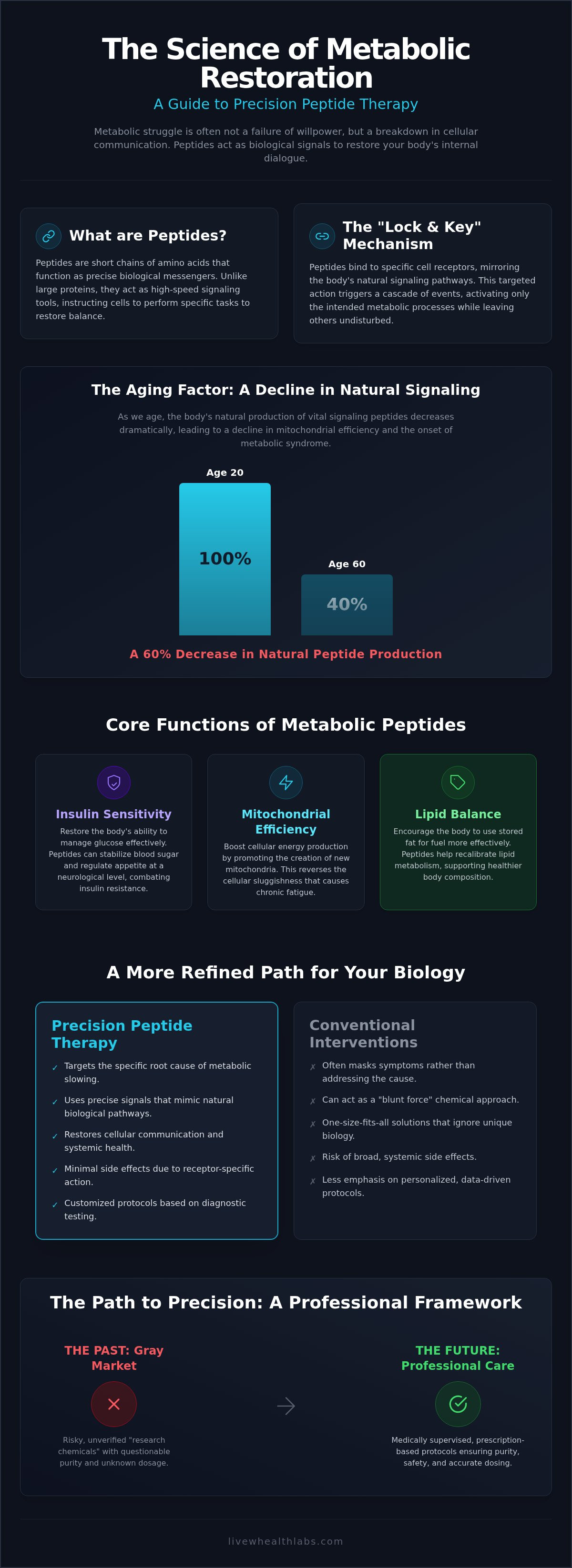
Peptides are short-chain amino acids that function as precise biological messengers within the human body. Unlike large proteins, these smaller molecular structures act as high-speed signaling tools, instructing cells to perform specific tasks. In the context of peptide therapy for metabolic health, these instructions focus on restoring the body's natural state of homeostasis. This isn't about forcing a result through brute chemical force; it's about repairing the broken communication lines that lead to weight resistance and chronic fatigue.
The year 2026 marks a significant evolution in how we view these molecules. There is a clear transition toward peptide therapy for longevity, where metabolic health is recognized as the foundation of biological age. This shift follows the February 2026 regulatory updates that moved 14 key peptides toward legal compounding under medical supervision. This provides a secure alternative to the risky, unverified "research chemicals" found in the gray market. Precision therapy requires a prescription and clinical oversight, ensuring that the formulations are pure and the dosing is accurate.
The Core Functions of Metabolic Peptides
Metabolic peptides prioritize three primary areas: insulin sensitivity, mitochondrial efficiency, and lipid balance. For example, understanding How GLP-1 Agonists Work reveals how these signals can stabilize blood sugar and regulate appetite at a neurological level. Beyond glucose management, specialized peptides target the mitochondria, the energy powerhouses of the cell. By optimizing ATP production, these signaling tools help reverse the cellular sluggishness that characterizes metabolic syndrome. This comprehensive approach supports better body composition by encouraging the body to utilize stored fat for fuel more effectively.
Why Precision Matters in 2026
The era of generic, one-size-fits-all metabolic solutions is fading. Every individual possesses a unique biological signature, meaning your signaling requirements differ from anyone else's. Peptide therapy for metabolic health succeeds because it targets the specific root causes of your metabolic slowing rather than just masking symptoms. Whether the issue is hormonal imbalance, chronic inflammation, or decreased growth hormone production, precision protocols provide the exact instructions your body needs to recalibrate. This level of customization is only possible through professional coordination and comprehensive diagnostic testing, ensuring that each intervention is both safe and effective.
The Biological Mechanism: How Peptides Signal Metabolic Restoration
Peptides operate through a highly specific "lock and key" mechanism. When introduced into the system, these molecules seek out and bind to specific cell receptors, triggering a cascade of intracellular events. This process isn't random. It mirrors the body's endogenous signaling pathways, which is why peptides are often referred to as biological mimetics. By mimicking natural ligands, peptide therapy for metabolic health bypasses the blunt-force approach of many synthetic drugs. Instead, it provides the precise instructions needed to downregulate systemic inflammation, which is a primary driver of metabolic resistance and weight gain.
The safety and efficacy of these pathways rely on the quality and precision of the signal. Researching Peptides: benefits and safety concerns highlights how targeted signaling can avoid the broad side effects associated with systemic medications. By focusing on receptor-specific binding, these protocols ensure that only the intended metabolic pathways are activated. This leaves unrelated biological processes undisturbed, maintaining the body's delicate internal equilibrium.
Peptides and the Mitochondria
Mitochondrial health is the cornerstone of metabolic vitality. Natural peptide production in the human body decreases by 60% between the ages of 20 and 60, often leading to a corresponding decline in mitochondrial efficiency. This decline results in reduced ATP production and the onset of metabolic syndrome. Specific peptides promote mitochondrial biogenesis, the creation of new mitochondria within the cells. This increase in cellular power plants allows for more efficient energy utilization and a noticeable reduction in systemic fatigue. It's a fundamental shift from merely managing symptoms to enhancing the body's core energy production capabilities.
Hormonal Synergy in Metabolic Signaling
The endocrine system functions like an orchestra, and peptides act as the conductor. Growth hormone secretagogues, for instance, don't replace natural hormones with synthetic substitutes. They stimulate the pituitary gland to release growth hormone in its natural, pulsatile rhythm. This synergy helps balance insulin levels and increases the resting metabolic rate. Restoring these natural rhythms is essential for long-term health, moving beyond temporary fixes toward sustainable biological balance. For those seeking a professional path to this balance, you can consult with a licensed provider to explore a personalized protocol. Utilizing peptide therapy for metabolic health within a medically supervised framework ensures that these signals are integrated harmoniously with your existing hormonal profile.
Peptide Therapy vs. Conventional Metabolic Interventions
Conventional metabolic interventions typically utilize broad-spectrum medications designed to manage symptoms. These systemic drugs often interact with multiple biological pathways simultaneously, which can lead to unintended "off-target" effects. In contrast, peptide therapy for metabolic health focuses on precision signaling. Instead of suppressing a specific symptom, peptides aim to restore the body's innate ability to regulate its own metabolism. This distinction is the difference between overriding a system and recalibrating it. While a generic pill might force blood sugar down, a peptide signal works to repair the insulin receptor sensitivity that caused the spike in the first place.
Recent research on novel peptide therapies demonstrates how these molecules can improve blood glucose and mitochondrial function without the heavy systemic burden of traditional pharmaceuticals. Because peptides are designed to bind only to specific receptors, they offer a cleaner therapeutic profile. This targeted approach is essential for long-term sustainability, as it reduces the likelihood of the body developing a tolerance or experiencing the metabolic "crash" often associated with generic stimulants or restrictive medications.
Targeted Signaling vs. Systemic Impact
The primary advantage of peptides lies in their localized receptor targeting. While oral medications must survive the digestive tract and first-pass metabolism in the liver, precision-delivery peptides enter the system in a more bioavailable form. This ensures that the molecular signal reaches the intended cellular destination with minimal degradation. Utilizing customized wellness formulations allows for a level of specificity that generic pills cannot match. By tailoring the signal to your unique biological data, providers can optimize metabolic pathways while minimizing interactions with unrelated systems. This precision is what allows for improved body composition and energy without the jitters or digestive distress common in conventional weight-loss drugs.
The Role of Medical Supervision
Accessing these advanced tools requires a professional framework. The rise of "research-grade" chemicals on the gray market presents a significant risk to those seeking peptide therapy for metabolic health. These unverified substances often lack purity and can introduce contaminants that disrupt delicate endocrine balances. A medically coordinated path ensures that every formulation comes from a licensed compounding pharmacy and is overseen by an independent provider. This administrative coordination isn't just about compliance; it's about safety. Licensed providers use biological feedback to adjust protocols in real-time, ensuring the intervention remains aligned with your evolving metabolic needs. This oversight transforms a generic treatment into a sophisticated, life-long strategy for systemic health.
Identifying Candidates for Advanced Metabolic Protocols
Identifying the right candidates for peptide therapy for metabolic health requires moving beyond surface-level symptoms. It involves a rigorous analysis of how your body processes energy and responds to stress. Many individuals arrive at this crossroad after years of "doing everything right" without seeing a change in their body composition or vitality. This state of metabolic resistance isn't a failure of effort; it's a clinical indicator that your internal signaling pathways need recalibration. When the body's natural dialogue is fractured, even the most disciplined diet and exercise routines can fail to produce results.
Precision protocols aren't for everyone. They're designed for those who seek a sophisticated, data-driven approach to wellness. The ideal candidate is someone who values transparency and professional oversight over quick, unverified fixes. They understand that restoring cellular communication is a methodical process that begins with a comprehensive review of their medical history and current biological state. This foundation ensures that every intervention is targeted, safe, and aligned with the individual's unique physiological requirements.
Metabolic Warning Signs to Monitor
Recognizing the need for intervention often starts with subtle shifts in daily performance. You might notice that your cognitive clarity isn't what it used to be, or that a full night's sleep no longer resolves your persistent fatigue. These are often the first signs of a metabolic slowing that traditional, broad-spectrum labs might overlook. Other indicators include:
- Persistent weight resistance despite consistent caloric deficits and physical activity.
- A noticeable decline in physical resilience and significantly longer recovery times after exercise.
- Fluctuations in mood and energy that correlate with blood sugar instability and insulin resistance.
The Clinical Screening Process
The transition from identifying symptoms to starting a protocol is governed by a strict clinical screening process. This phase is built entirely on biomarker data. Independent licensed providers evaluate these biomarkers to determine your specific signaling needs, ensuring that any prescribed peptide is both necessary and safe. This isn't a generic retail transaction; it's a highly regulated medical coordination that respects professional boundaries.
Your medical history serves as the essential foundation. By analyzing past health events and current medications, providers can design a protocol that avoids systemic interference and maximizes efficacy. This process ensures that peptide therapy for metabolic health is integrated into your life with administrative excellence and HIPAA-compliant security. If you're ready to move beyond generic advice and explore a precision-based path, start your consultation with a licensed provider today to determine your clinical eligibility.
The Path to Precision: Medically Coordinated Peptide Care
The Whealth Labs model operates as a sophisticated bridge between individuals and the world of advanced clinical science. This isn't a direct medical practice; it's a coordination framework designed to ensure that peptide therapy for metabolic health is accessible, secure, and compliant. By facilitating the administrative connection between patients, independent licensed providers, and compounding pharmacies, the model removes the friction often associated with high-level wellness. Accessing precision peptide therapy online allows for a level of convenience that doesn't compromise on professional standards or therapeutic integrity. It's a methodical approach to systemic optimization.
Maintaining this level of administrative excellence requires a transparent and organized structure. Understanding administrative medical coordination fees is essential for anyone entering this precision system. These fees cover the rigorous HIPAA-compliant data management and the complex logistical oversight necessary to maintain 2026 regulatory standards. This investment ensures that your path to wellness is built on a foundation of safety and administrative precision, providing a secure alternative to the fragmented and often risky landscape of uncoordinated care.
Facilitating Expert Consultations
The journey begins with a methodical telehealth intake process. This coordination provides direct access to specialized independent licensed providers who understand the nuances of metabolic signaling. During the administrative intake, your data is managed through secure, HIPAA-compliant systems, ensuring total privacy. The subsequent medical review isn't a formality. It's a deep dive into your biological markers to ensure that peptide therapy for metabolic health is the correct clinical path for your specific needs. This step guarantees that every protocol is overseen by an expert who can interpret complex diagnostic feedback and adjust the plan as your biology responds.
Precision Fulfillment and Logistics
Once a protocol is established, the focus shifts to precision fulfillment. Specialized compounding pharmacies play a critical role here, as they're responsible for the therapeutic purity of the formulations. Coordination ensures that these pharmacies adhere to the strict 2026 standards for secure, professional fulfillment services. You don't just receive a product; you receive a customized wellness formulation that's been vetted for quality and accuracy. This seamless logistical chain ensures that the molecular signals reaching your door are exactly what the provider intended, maintaining the integrity of your metabolic restoration from the first dose to the last.
Restoring Your Metabolic Dialogue
The journey toward peptide therapy for metabolic health is no longer a matter of guessing with generic supplements or broad-spectrum medications. You've seen how precision signaling can repair fractured cellular communication and revitalize mitochondrial function at the source. This isn't a temporary fix; it's a structured return to biological balance that respects your unique physiological signature. By prioritizing data-driven protocols over gray-market experimentation, you secure a path to long-term systemic health and improved body composition.
Whealth Labs serves as your essential bridge to this advanced science. Through our HIPAA-compliant telehealth platform, you gain direct access to independent licensed medical providers who specialize in these sophisticated formulations. Every protocol is fulfilled through coordination with specialized US compounding pharmacies, ensuring the highest standards of therapeutic purity. If you're ready to move beyond metabolic resistance and embrace a future of optimized energy, the next step is a professional one.
Explore Precision Peptide Coordination with Whealth Labs and begin your transition to a more refined standard of wellness. Your body is ready to listen; it just needs the right signal.
Frequently Asked Questions
Is peptide therapy for metabolic health safe for long-term use?
Safety is maintained through continuous medical oversight and data-driven protocol adjustments. Because peptides mimic endogenous signals, they're generally well-tolerated when used within a professional framework. The 2026 regulatory updates emphasize the importance of using compounded formulations from licensed pharmacies rather than unverified sources. Long-term use requires regular biomarker monitoring to ensure the signaling remains aligned with your body's evolving metabolic needs and safety standards.
How long does it take to see results from metabolic peptide therapy?
Visible results from peptide therapy for metabolic health typically emerge within three to six months of consistent use. While cellular signaling changes occur almost immediately, systemic shifts in body composition and energy levels require time to manifest. Many individuals report improved cognitive clarity and better sleep quality within the first few weeks. Sustained metabolic restoration is a gradual process that depends on your baseline health and adherence to the prescribed protocol.
Do I need a prescription for precision peptide therapy?
Yes, precision peptide therapy requires a valid prescription from a licensed medical provider. Legitimate therapeutic peptides aren't sold over the counter as generic supplements. This requirement ensures that the medication is tailored to your specific biological needs and that its use is clinically appropriate. Accessing these formulations through a coordinated model ensures that you receive precision-grade ingredients from specialized compounding pharmacies rather than unverified online sources.
Can peptides help with metabolic resistance even if I exercise regularly?
Peptides address the underlying signaling failures that often cause metabolic resistance even in active individuals. Regular exercise is essential, but it can't always overcome cellular communication breakdowns or mitochondrial inefficiency. peptide therapy for metabolic health works to restore these internal dialogues, allowing your body to respond more effectively to the physical demands of your lifestyle. It provides the biological "green light" your cells need to utilize energy efficiently.
What is the difference between research peptides and prescribed therapy?
The primary difference lies in purity, safety, and clinical oversight. Research-grade peptides are often sold as unverified chemicals with no guarantee of purity or dosage accuracy, posing significant health risks. Prescribed therapy involves precision-grade formulations produced by licensed US compounding pharmacies under strict regulatory standards. The 2026 reclassification of key peptides has further solidified the legal path for patients to access high-quality, medically supervised alternatives to the unregulated gray market.
How does the medical coordination process work for new patients?
The process begins with a secure, HIPAA-compliant telehealth intake where you provide your health history and biomarker data. An independent licensed provider then reviews this information to determine your eligibility and design a personalized protocol. Once approved, the administrative team coordinates with specialized compounding pharmacies to fulfill your prescription. This seamless logistical chain ensures that you receive your customized wellness formulations with professional accuracy and administrative excellence.
Are metabolic peptides covered by traditional health insurance?
Traditional health insurance plans rarely cover compounded peptide therapies in 2026. Coverage is typically limited to specific FDA-approved drugs for diagnosed medical conditions like type 2 diabetes. However, many patients successfully use Health Savings Accounts (HSA) or Flexible Spending Accounts (FSA) to manage the costs of consultations and laboratory testing. It's best to consult with your plan administrator to verify which administrative or diagnostic components of the coordination process are eligible for reimbursement.
What biomarkers are typically monitored during peptide therapy?
Providers typically monitor a comprehensive panel of biomarkers to track your metabolic response. This includes fasting glucose and insulin levels to assess sensitivity, along with HbA1c for long-term blood sugar trends. Lipid profiles, inflammatory markers like hs-CRP, and IGF-1 levels are also frequently evaluated. These data points allow for real-time protocol adjustments, ensuring that the peptide signaling remains precise and effective while maintaining your systemic health and safety.