
Is the "research use only" label on your peptide vial a clever legal loophole, or is it a quiet admission that the substance inside has never seen the interior of a sterile, regulated facility? For many, the debate of prescribed peptides vs research chemicals isn't just about price. It's about the fundamental difference between a verified clinical ecosystem and a digital gray market. You likely recognize that your health is too valuable for guesswork. Still, the conflicting headlines about FDA reclassifications and shifting bulk lists make it difficult to know where to turn for legitimate care.
This article clarifies the critical differences between regulated peptide therapy and unverified research chemicals to ensure your wellness journey is both safe and effective. We'll examine the 2026 regulatory landscape, the hidden risks of unsterile manufacturing, and the streamlined way to access precision-grade formulations through a professional coordination model. By understanding the clinical reality of these substances, you can move past the confusion of legal gray areas and toward a supervised, high-purity protocol designed for your specific biological needs.
Key Takeaways
- Distinguish between patient-specific therapeutic formulations and research-grade materials intended exclusively for laboratory analysis.
- Uncover the legal implications of the "For Research Use Only" label and why these vendors aren't held to pharmaceutical purity standards.
- Identify the critical safety benefits of prescribed peptides vs research chemicals, specifically the role of ISO-certified cleanrooms and cGMP compliance.
- Understand why professional medical oversight and ongoing biomarker monitoring are indispensable for a successful wellness protocol.
- Explore how a coordinated administrative model simplifies the transition from unverified substances to medically supervised, precision-grade therapy.
The Fundamental Dichotomy: Pharmaceutical Integrity vs. Research-Grade Materials
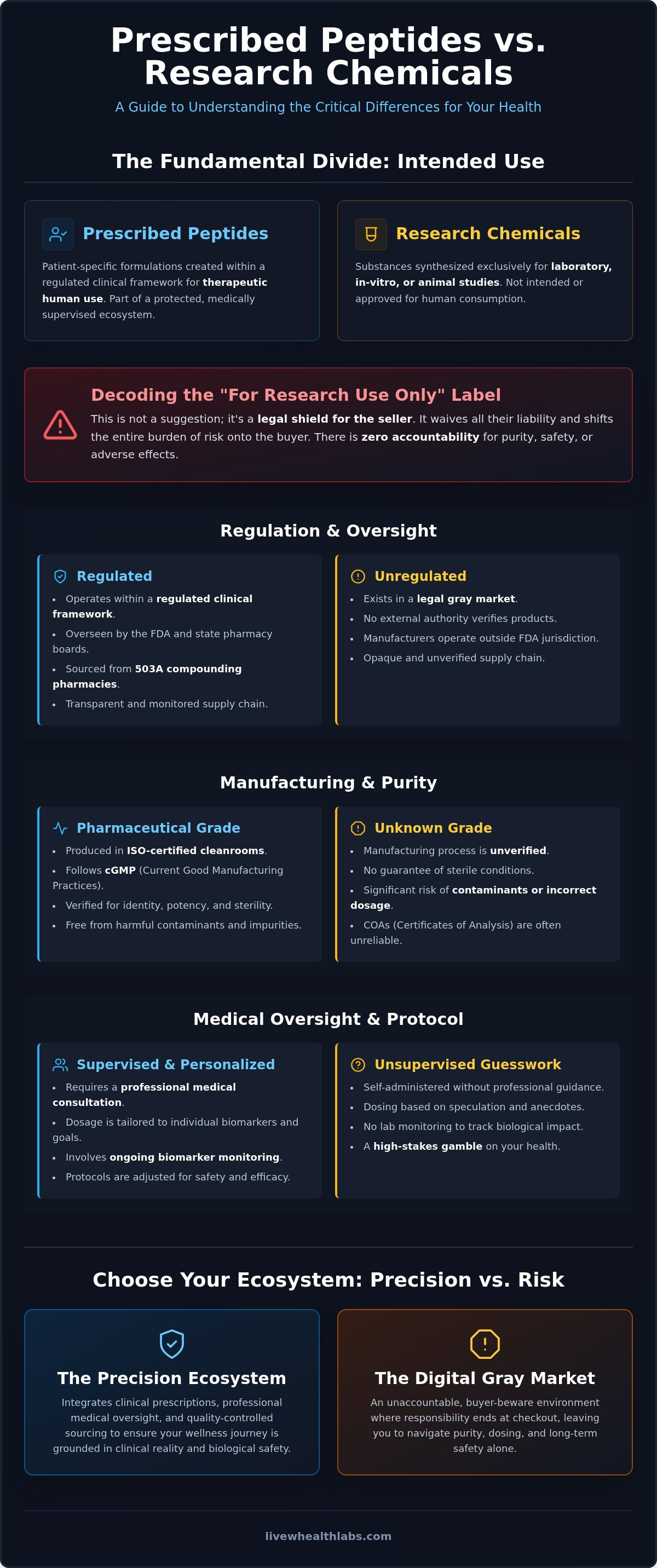
The distinction between prescribed peptides vs research chemicals isn't merely a matter of legal semantics; it is a fundamental divide in manufacturing standards and biological intent. Prescribed peptides represent patient-specific formulations created within a regulated clinical framework for therapeutic use. Conversely, research chemicals are substances synthesized exclusively for laboratory in-vitro or animal studies. While the biohacking community often blurs these lines by repurposing research-grade materials for human self-administration, the "intended use" remains a critical safety boundary. A truly effective wellness journey requires a Precision Ecosystem, which integrates clinical prescriptions, professional medical oversight, and quality-controlled sourcing.
This ecosystem ensures that every intervention is grounded in clinical reality rather than speculative experimentation. When you opt for a prescribed path, you aren't just buying a molecule; you're engaging with a system designed to protect your biological integrity. Research chemicals, by their very definition, lack this protective layer. They exist in a space where the manufacturer's responsibility ends the moment the vial leaves the warehouse, leaving the user to navigate the complexities of dosing, purity, and long-term safety without a professional map.
The Scope of Precision Peptide Therapy
Precision therapy focuses on the individual. Unlike bulk-manufactured research vials that offer a one-size-fits-all approach, individualized prescriptions are tailored to a patient’s specific biomarkers and wellness goals. This process relies on a robust patient-provider relationship where therapeutic outcomes are monitored and protocols are adjusted in real-time. In many corners of the internet, the term "research chemical" serves as a marketing euphemism for unregulated products that bypass the safety protocols required for human consumption. Choosing a clinical path ensures that the molecules you introduce to your body are verified for both identity and purity through legitimate channels. It's the difference between a calculated medical decision and a high-stakes gamble on unverified substances.
Understanding the Regulatory Divide
Regulatory oversight provides the essential guardrails for modern medicine. The FDA maintains rigorous standards for human-grade medications, ensuring that every step of the manufacturing process meets strict safety criteria. Research vendors operate outside this jurisdiction because their products are legally sold under the disclaimer that they are not for human use. This lack of oversight means there is no external authority verifying the sterility or potency of the substances they ship. The regulatory gap is defined by the distance between the transparent, state-monitored oversight of a 503A compounding pharmacy and the opaque, unverified manufacturing chains of gray-market research vendors. Without this oversight, the risk of contaminants or incorrect concentrations increases significantly, making the choice of prescribed peptides vs research chemicals a question of fundamental safety.
Decoding the "For Research Use Only" Label: A Legal Shield or a Safety Warning?
The "Not for Human Consumption" label found on research vials is a sophisticated legal instrument. It's designed to protect the seller, not the buyer. When evaluating the choice between prescribed peptides vs research chemicals, it's vital to recognize that this disclaimer isn't a suggestion; it's a formal waiver of liability. By including this language, vendors shift the entire burden of risk onto the individual. If a substance causes an adverse reaction or contains harmful impurities, the vendor's defense is already printed on the packaging. They explicitly told you not to use it. This zero accountability model means that the consumer has no legal recourse if the product fails to meet basic safety or purity expectations.
Research vendors aren't legally mandated to provide Certificates of Analysis (COAs) to their customers. Even when they do, these documents are often batch-specific and don't necessarily reflect the contents of the vial in your hand. Unlike the pharmaceutical world, there's no regulatory body verifying that the paperwork matches the product. Injecting unverified substances under a "buyer beware" framework introduces a level of biological uncertainty that is incompatible with a serious wellness journey.
The Legal Gray Market Explained
Vendors exploit specific loopholes by positioning their products as tools for laboratory analysis rather than therapeutic interventions. This strategic positioning allows them to bypass the rigorous oversight required for human medications. This FDA warning on research chemicals illustrates that the government views these disclaimers with skepticism. The FDA clarifies that such labels don't exempt substances from being classified as unapproved new drugs when their marketing implies human use. It's also important to understand that "Research Grade" is a marketing term, not a clinical standard. It doesn't guarantee the sterility or pyrogen-free status required for safe administration.
The Consumer Risk Profile
The risks of gray-market sourcing extend far beyond the physical. There's a profound psychological cost to the uncertainty inherent in using unverified materials. Because these chemicals exist outside the medical establishment, insurance providers won't cover complications, and licensed medical boards cannot support their use. You're essentially conducting an unsupervised clinical trial on your own physiology without a safety net. Transitioning to a professionally coordinated framework replaces this anxiety with the quiet confidence of clinical standards. In a supervised model, administrative excellence ensures that every protocol is documented and every formulation is verified, allowing you to focus on results rather than risks.
The Critical Role of Sterile Compounding and cGMP Standards
The physical environment where a peptide is synthesized determines its clinical viability. Current Good Manufacturing Practices (cGMP) are not optional suggestions; they are rigorous, legally mandated systems that ensure pharmaceutical integrity. While the debate over prescribed peptides vs research chemicals often focuses on legality, the technical reality centers on sterility. Injectable therapies require ISO-certified cleanrooms where air quality, surface contaminants, and technician movements are strictly controlled to prevent the introduction of pathogens. Research chemicals, synthesized in facilities that bypass these standards, frequently harbor hidden dangers like heavy metals, residual solvents from the synthesis process, and bacterial endotoxins.
Peptides are also highly sensitive molecules. Improper handling or exposure to temperature fluctuations leads to rapid degradation, turning a therapeutic substance into an inactive or even harmful fragment. Without the stability testing and cold-chain logistics provided by a regulated pharmacy, there's no guarantee that the sequence you receive is biologically active. When evaluating prescribed peptides vs research chemicals, the clinical standard requires a level of environmental control that gray-market laboratories simply don't maintain.
503A vs. 503B: The Standards of Excellence
Understanding the distinction between 503A and 503B facilities is essential for anyone seeking precision care. A 503A pharmacy focuses on patient-specific compounding, creating formulations tailored to an individual prescription. In contrast, 503B outsourcing facilities operate under much stricter cGMP requirements, similar to those of traditional drug manufacturers. Both models prioritize raw ingredient verification. Licensed pharmacies don't simply take a vendor's word for purity; they conduct independent third-party potency testing and identity verification before a single vial is filled. This multi-layered verification process is entirely absent in the gray market.
The Dangers of Substandard Sourcing
Research-grade materials often contain fillers or incorrect amino acid sequences that the human body may recognize as foreign. This creates the risk of an immunogenic response, where your immune system develops antibodies against the peptide, potentially causing systemic inflammation or neutralizing the effect of future treatments. USP <797> standards require that all sterile injectable preparations, including subcutaneous administrations, must be compounded in an ISO Class 5 environment with strictly monitored air filtration and surface sanitization protocols. Research chemicals typically lack this level of environmental control. When you inject a substance that hasn't been verified for endotoxin levels, you risk severe localized reactions or systemic "peptide flu" caused by manufacturing impurities.
Beyond the Molecule: Why Medical Oversight and Lab Monitoring are Essential
A peptide is a biological signal, but without a precise map, that signal can easily become noise. In the debate of prescribed peptides vs research chemicals, the focus often lingers on the vial's contents, yet the most significant variable is the protocol governing its use. Sophisticated wellness isn't achieved through isolated molecules; it's the result of a data-driven architecture. Clinical guidelines rely on baseline blood work and ongoing biomarker tracking to ensure that the body is receptive to therapy and that the intervention is yielding the intended physiological response.
Self-dosing based on anecdotal evidence from internet forums is a high-risk strategy. These platforms lack the clinical context of your unique medical history, pre-existing conditions, or potential contraindications. Licensed providers serve as the essential filter, managing potential side effects and ensuring that the therapy doesn't interfere with other biological systems. Choosing prescribed peptides vs research chemicals means choosing a controlled clinical process over a speculative experiment.
Precision Protocols vs. DIY Guesswork
Independent medical providers play a vital role in tailoring dosages to your specific biology. They understand that more isn't always better. Proper cycle management is critical to prevent receptor desensitization and hormonal imbalances, ensuring that the therapy remains effective over the long term. Professional guidance allows for a nuanced interpretation of results, distinguishing between expected progress and signs that a protocol needs immediate recalibration. This level of precision is impossible to achieve through the trial-and-error approach common in the research chemical community.
The Importance of Clinical Accountability
When a protocol requires adjustment, having direct access to a provider is indispensable. Medical history matters. A thorough screening for pre-existing conditions before starting therapy prevents complications that a gray-market vendor would never consider. The administrative coordination model facilitates this level of supervision without the friction typically associated with traditional clinical care. It bridges the gap between the patient and the independent provider, ensuring that the administrative side of wellness is as precise as the therapy itself. There is a profound peace of mind that comes with a medically validated path, knowing that your journey is being coordinated by experts who respect professional boundaries. To begin your journey with a structured, data-driven approach, consult with a licensed provider through our coordination platform.
Navigating the Path to Precision: The Administrative Coordination Model
The transition from speculative experimentation to clinical precision requires a structured administrative framework. For many individuals, the barrier to high-purity therapy isn't a lack of interest, but the friction of navigating a fragmented medical system. Administrative coordination serves as the modern solution, bridging the gap between sophisticated patients and the clinical world. This model replaces the chaotic search for independent providers with a streamlined, organized process that prioritizes administrative excellence and HIPAA-compliant data management.
The choice of prescribed peptides vs research chemicals often comes down to accessibility. Gray-market vendors offer the illusion of convenience, yet they lack the necessary infrastructure to protect patient privacy or ensure therapeutic safety. A professional coordination platform manages the complex logistics of wellness therapy, allowing patients to focus on their longevity goals while experts handle the administrative compliance. This organized approach ensures that every step, from the initial consultation to the final formulation, meets the highest professional standards.
Seamless Access to Licensed Expertise
Coordination platforms function as a vital intermediary, connecting patients with specialized independent providers who understand the nuances of peptide protocols. Once a provider determines a therapeutic need, the platform facilitates the fulfillment of wellness therapy formulations through verified compounding pharmacies. This ecosystem is superior to both rigid retail clinics and high-risk gray-market vendors. It offers a level of customization that mass-market solutions can't match, while maintaining the safety standards that research chemicals lack. By organizing the patient journey into a logical, structured flow, the coordination model ensures that precision therapy is both accessible and clinically responsible.
The Whealth Labs Commitment to Excellence
At Whealth Labs, the focus remains on the "Precision Ecosystem." This approach prioritizes clinical integrity over the short-term convenience of unregulated sourcing. We believe that longevity is an architecture of coordination, requiring a balance of high-purity ingredients, professional medical oversight, and rigorous administrative standards. Choosing a coordination-first model means you aren't just purchasing a product; you're entering a system designed for predictable, verified results. When evaluating the risks of prescribed peptides vs research chemicals, the value of a medically validated path becomes clear. We invite you to explore the Whealth Labs coordination process for precision therapy and discover how administrative excellence can transform your wellness journey.
Advancing Toward a Verified Standard of Longevity
The choice between prescribed peptides vs research chemicals is ultimately a decision about the value you place on your biological future. We've established that the "research only" label isn't a loophole; it's a structural warning regarding the lack of sterility and accountability. True precision wellness requires more than just a molecule. It demands a rigorous ecosystem of clinical oversight, verified cGMP manufacturing, and data-driven protocols. By moving beyond the gray market, you replace speculative risks with pharmaceutical integrity.
Whealth Labs serves as the essential bridge in this landscape. Through our coordination model, you gain seamless access to HIPAA-compliant independent providers and elite compounding pharmacy formulations. Our commitment to administrative excellence ensures that your path to precision health is as organized as it is effective. You don't have to navigate these clinical complexities alone. Choosing a supervised, high-purity path represents a fundamental commitment to your physiological integrity. It is the most significant investment you can make in your long-term vitality.
Begin your journey toward precision wellness with Whealth Labs and secure the clinical standards your health deserves.
Frequently Asked Questions
Is it illegal to buy research chemicals for personal use?
Buying research chemicals for human consumption violates the Federal Food, Drug, and Cosmetic Act. While vendors use the "research only" label as a legal shield, the FDA classifies these substances as unapproved new drugs when marketed for personal use. You aren't just navigating legal ambiguity; you're bypassing the entire safety infrastructure required for therapeutic substances. Legitimate wellness requires a prescription issued by a licensed provider for a patient-specific formulation.
Why are prescribed peptides more expensive than research chemicals?
The price difference reflects the investment in pharmaceutical integrity and professional oversight. When comparing prescribed peptides vs research chemicals, the cost covers ISO-certified cleanrooms, third-party potency testing, and sterile compounding standards. You're paying for cold-chain logistics and the administrative coordination that ensures your protocol is medically validated. Research chemicals reduce costs by omitting these essential safety layers, leaving the consumer to bear the full biological risk.
Can I get a prescription for peptides through a telehealth consultation?
Yes, you can access precision therapy through a telehealth consultation with an independent licensed medical provider. Coordination platforms facilitate these connections, ensuring that your medical history is reviewed and that baseline blood work is evaluated before any prescription is issued. This model provides a streamlined way to access high-purity formulations while maintaining the professional oversight necessary for a safe and effective wellness journey without requiring in-person clinical exams.
What are the most common side effects of using unverified research peptides?
Unverified research peptides carry significant risks, including immunogenic responses where the body develops antibodies against the substance. Because these chemicals often lack sterility, localized infections or systemic reactions from bacterial endotoxins are common. You also risk exposure to heavy metals or residual solvents. Without clinical guidelines, improper dosing can lead to receptor desensitization or hormonal imbalances that are difficult to correct without a professional medical intervention.
How do I know if a compounding pharmacy is legitimate?
A legitimate compounding pharmacy must be licensed by its state board of pharmacy and comply with USP standards for sterile preparations. You should verify if they operate as a 503A or 503B facility. Legitimate pharmacies always require a patient-specific prescription and provide documentation of third-party testing for potency and purity. Coordination services help bridge this gap by only facilitating orders through pharmacies that meet these strict clinical and administrative benchmarks.
Do research chemicals have the same purity as pharmaceutical-grade peptides?
Research chemicals rarely match the purity of pharmaceutical-grade peptides because they aren't manufactured for human administration. While a vendor might claim high purity, they often don't test for sterility, pyrogens, or the presence of harmful manufacturing byproducts. Pharmaceutical-grade substances are synthesized in cGMP-compliant facilities that prioritize biological safety. Research grade is intended for laboratory studies where human-specific safety requirements, such as being pyrogen-free, aren't verified.
What should I look for in a peptide therapy coordination service?
Look for a service that prioritizes HIPAA-compliant data management and administrative transparency. A high-quality platform should focus on coordinating care between patients, independent licensed providers, and verified compounding pharmacies. It's important that the service doesn't practice medicine directly but acts as a professional facilitator. They should provide a clear path to precision therapy while maintaining the highest standards of administrative compliance and organized patient support throughout the protocol.
Can research chemicals be detected in blood work differently than prescribed ones?
While the peptide molecule itself may appear identical, the physiological impact of research chemicals often reveals itself through secondary markers. Impurities like heavy metals or residual solvents can trigger abnormal liver or kidney markers in your blood work. Additionally, if the peptide sequence is incorrect or impure, it may cause an elevation in inflammatory markers or abnormal immune responses. Medically supervised therapy includes ongoing biomarker tracking to ensure your body is responding predictably.